Details of the Yerebasan project to be exhibited at the Turkish Pavilion at the Venice Architecture Biennale have been announced
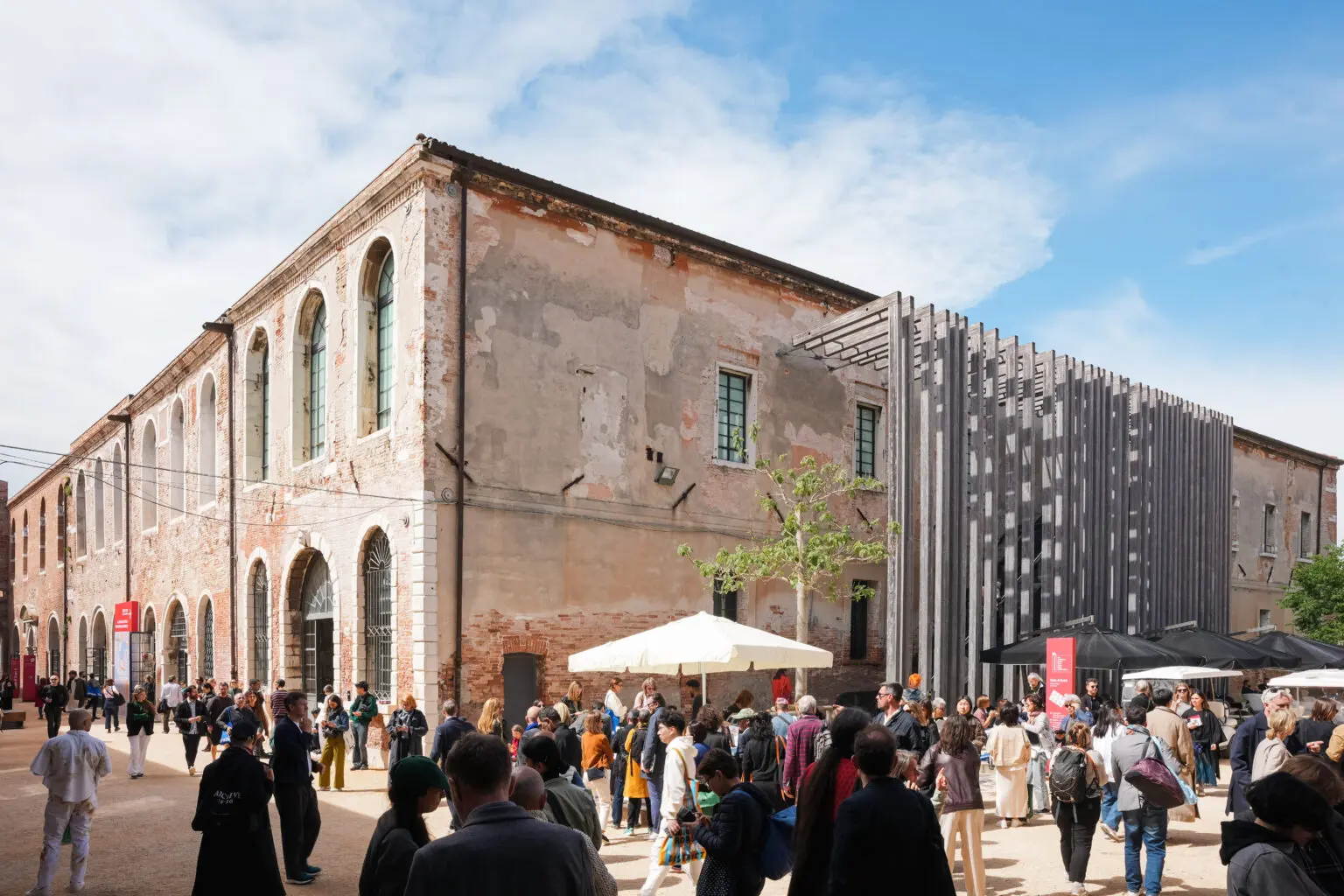
The project titled “Yerebasan”, curated by Ceren Erdem and Bilge Kalfa, will be exhibited at the Turkish Pavilion of the 19th International Architecture Exhibition of the Venice Biennale, coordinated by the Istanbul Foundation for Culture and Arts (İKSV).
Yerebasan , which will invite visitors to establish a deeper connection with the soil, was designed as an interactive exhibition where the soil can be felt and sensed. With this exhibition, the curators propose to listen to what the soil can teach while imagining sustainable, durable and environmentally compatible construction and living styles, and to consider the soil as a common ground for the societies of the future .Hüseyin Aksoy, Michael Akstaller, E. Füsun Alioğlu & Senem Akçay, Ali Mahmut Demirel, Sinem Dişli, Yelda Gin, Ali Miharbi, Özgül Öztürk, Serkan Taycan and Orkan Telhan are participating in the exhibition with their individual contributions. Bire-Pan, Common Action Walls, Mimarlık for Everyone & Poçolana Works, Mono Earth, Ozruh, Rec II, ReYard House, Solidified and Yalın Mimarlık are contributing to the exhibition as a team.
The Turkish Pavilion, located in the Arsenale, one of the main venues of the Biennale, is organized under the coordination of İKSV, with the contributions of the Ministry of Culture and Tourism of the Republic of Turkey, and under the auspices of the Ministry of Foreign Affairs of the Republic of Turkey . The Turkish Pavilion exhibitions at the Venice Architecture Biennales have been co-sponsored by Schüco Turkey and VitrA since 2014. This year , the organizations contributing to the Turkish Pavilion are Fibrobeton Yapı Elemanları and STONELINE , Turkish Airlines as the airline partner, and FÖRNİ and SAHA Association as production supporters.
Press conference of the Turkish Pavilion at the Venice Architecture Biennale
Details of the project called Yerebasan , which will take place in the Turkish Pavilion of the 19th International Architecture Exhibition of the Venice Biennale , were shared by curators Ceren Erdem and Bilge Kalfa at a meeting held at Metrohan on Tuesday, March 11 .
The curators introduced the project as follows: “With Yerebasan, we invite visitors to perceive soil not as an independent entity, but as an inseparable part of the living fabric that surrounds us. Soil is not just a surface beneath us, or a resource to be extracted; it is rather a dense, intelligent world that we are a part of. The exhibition encourages us to rethink our place in this dynamic exchange through material research, artistic documentation and scientific observations. It invites us to see the structures we erode and the possibilities we often ignore. In this way, it proposes ways of living and building that do not impose themselves, but rather listen to and interact with the environment.”
İKSV General Manager Görgün Taner , Turkish Pavilion co-sponsors Schüco Turkey General Manager Can Eren and Eczacıbaşı Building Products CEO Hasan Pehlivan made comments on the subject on behalf of VitrA .
İKSV General Manager Görgün Taner made the following statement regarding the exhibition to be held at the Venice Architecture Biennale in 2025: “As the Istanbul Foundation for Culture and Arts, we attach great importance to the representation of cultural, artistic and intellectual production in Turkey abroad, and we work to increase international interaction opportunities for creative professionals both through the activities we organize in Istanbul and our events abroad. This year in Venice, under the leadership of our curators, we are hosting an exhibition with broad participation, addressing traditional models with new technologies, looking at current issues with new perspectives, and bringing together projects that give hope for the future. After providing our country with a permanent venue at the Arsenale with the contributions of 21 supporters in 2014, we are delighted to have enabled our country to participate in the international exhibition at the Venice Architecture Biennale, and we would like to thank all institutions, organizations and individuals who made this exhibition possible.”
Schüco Turkey General Manager Can Eren said, “In recent years, we have been developing systems that will provide a harmonious union between man-made structures and the environment, and we are trying to contribute to buildings that are seamlessly integrated with the natural environment. We would like to thank everyone who contributed to the ‘Yerebasan’ project, which will establish a deeper connection with the soil, and we are happy to be a co-sponsor in this biennial.”
Stating that they have been among the supporters of the Turkish Pavilion since 2014, when our country first gained a permanent exhibition space, Eczacıbaşı Building Products CEO Hasan Pehlivan said , “Ceramics keep the memory of the geography where they are produced alive. In this way, they build a bridge between the past and the future. With our VitrA brand, we have been keeping the memory of our land alive for 67 years. We are very excited to contribute to this valuable project that will carry the story of the land to the future through architecture and design.”
Yerebasan brings soil to the forefront, a resource that is often overlooked despite its dynamism and is vital to our understanding of civilizations, ecosystems and the essence of sustainable living. Featuring soil samples from Turkey, the exhibition reveals the various qualities of soil through sensory experiences, scientific research and artistic interpretations.
Architecture often tends to suppress aspects of the soil in the name of creating clean and controllable environments. In contrast, Yerebasan places the soil at the center of the pavilion, presenting it as a living entity with intelligence and agency. Visitors interact with the texture, smell, and sound of the soil, experiencing it as both an ecological system and a living archive of natural and human history.
Yerebasan also explores Türkiye’s rich heritage, archaeological sites and sustainable building practices while reflecting on the impact of human activities such as construction. By blending local techniques with contemporary innovations, the exhibition envisions architectural approaches that respect nature and culture, encouraging more harmonious lifestyles with nature.