A part of the area of the future Trueta hospital is affected by the risk of flooding
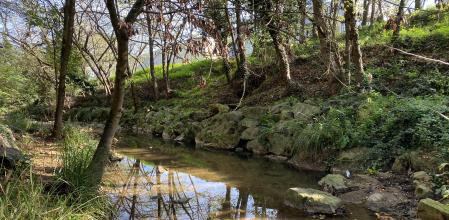
A part of the area of the future Trueta hospital is affected by the risk of flooding
The future Girona health campus, which will house the new Trueta hospital, the faculties of Nursing and Medicine and the biomedical research institute, among other services, is partially affected by the risk of flooding for a return period of 500 years, as stated in the technical report of the Servei Català de la Salut and other reports. It is the time that, on average, it is estimated that an extreme phenomenon of torrential rains may occur that may end up affecting the infrastructure. An index that denotes a low probability of this occurring, but at the same time entails a greater risk of danger due to uncontrolled floods.That the future Trueta occupies, in part, floodplains is no surprise. Both the Town Councils of Salt and Girona, in whose municipalities this hospital center will be built, which will occupy an area of 220,000 square meters (175,000 of new construction), as well as Salut, have been working for some time to overcome the hypothetical impact of the overflow of the Masrocs torrent. and the impact it would have on a small part of the new health park.
A lamination pond and placing the campus above the flood level with a 500-year return period, among the planned measures
The hydraulic study commissioned by the Girona City Council on this torrent, a tributary of the Güell River, which delimits the land where the campus is planned to be built, proposes a double strategy to resolve the issue of flooding.
On the one hand, a lamination pond of 29,000 square meters is contemplated in the bed of the stream and the lowering of the current motte by 15 centimeters "to avoid the excessive entry of overflowing flows on the left bank of the river and that could affect existing or future buildings. A lamination pond is a hydraulic work consisting of a depression in the ground that stores rainwater.
It is also proposed to build the campus above the 500-year level of the return period, with an additional 50-centimeter buffer as extra protection. "After this action, the area will be located outside the flood zone for a return period of 500 years," they explain from Salut. These are measures that companies bidding for the campus project competition, which opened a few weeks ago, must take into account. A hydraulic study that is part of the documentation that accompanies the modification of the PGOU and that is pending several reports, among them from the Catalan Water Agency (ACA).
The possibility that the Trueta could end up being located in a flood zone, even if the risk is completely corrected, has generated some criticism from neighborhood entities or social agents. The CCOO union requests new studies on this aspect and the neighborhood association El Parc is not touched (affected by the transfer of this space when the campus is built) demands that it not be built in areas that raise doubts and asks to locate the new equipment in front of the Santa Caterina hospital, in a 100% non-flood zone. That would mean that Girona would not have any square meter of campus, which would be located entirely in the Salt area.
The institutions have been working for years following all the processes scrupulously, of course also all those that have to do with risk prevention.
The Girona City Council reassures. “The institutions have been working for years following all the processes scrupulously, of course also all those that have to do with risk prevention,” explains the mayor of Urban Transformation, Cristina Andreu. The deputy mayor of Territori de Salt, Àlex Barceló, emphasizes that once the area is urbanized, the Trueta area will not be affected by flood problems.
Be that as it may, the Campus de la Salut Observatory hopes that this situation does not generate more delays. Its spokesperson, Josep Vilaplana, says that each procedure adds “between six months and a year of delay.” From Salut they assured a few weeks ago that the date of 2030 will hardly be met and the Observatori calculates that the new Trueta will not be a reality before 2032.