How far not to go too far?
How far not to go too far?
LaMost of the red lines, deemed “impassable”, which had been established from March-April 2022, at the start of equipment deliveries, were blown up one after the other:• the bringing online of German Leopard 2 tanks, American M1 Abrams, British Challenger 2s, AMX-10 armored vehicles and French Caesar cannons;
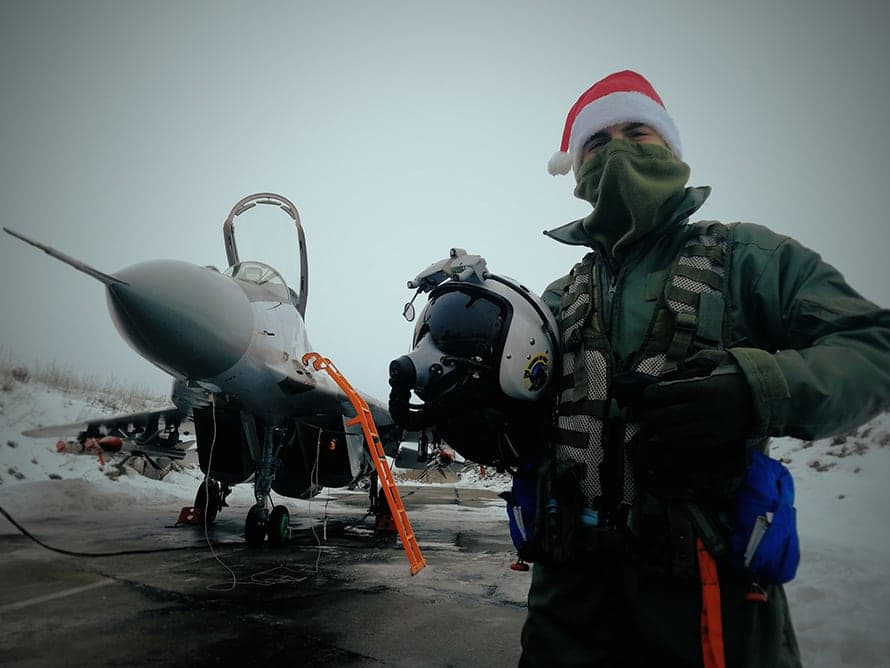
• the entry into the running of Polish and Slovak MiG-29 combat aircraft, or North Macedonian Su-25 fighters;
• the arrival of the first “European” F-16s;
• long-range missile fire, such as the Franco-British Storm Shadow or Scalp.
Despite the threats made daily to the Russian media, and at regular intervals by President Putin himself, “ nothing happened » , argue some of the “on-set experts” on the news channels in France. As long as we do not touch on nuclear power and we remain in the “conventional”, there would not really be a “red line”, judge several of them. It is true that Ukrainian land incursions — limited last year in the Belgorod region, but more massive in recent months in the Kursk sector — have not given rise to significant military responses or even outgoing threats. from the ordinary.
Direct link
There is perhaps, however, a recent shift, with the increasingly pressing desire of the Ukrainian army to free itself from current restrictions on the firing of missiles of "NATO origin", which would be likely to reach the barracks or military nerve centers from which Russian attacks on Ukraine originate. The Ukrainians' lack of ammunition, weapons and fighters, at a time when winter is coming, when the country's electrical infrastructure is being shelled, when society seems tired and worried, and when the ruling circles are torn apart, have given to these calls for help from the Ukrainians a resonance of "life or death", in recent weeks, even if most of the aforementioned experts agree in considering that a green light given on the use of long-range missiles born would not necessarily change the course of the war.In Europe, the French executive is in favour of the free use of its Scalp missiles, as long as they are military targets. Also very committed to supporting Ukraine, the Dutch government has just allowed Kiev to use long-range weapons on Russian soil: "international law is not limited by distance" and "does not stop 100 kilometers from the border," argued Dutch defense minister Ruben Brekelmans, adding that the Netherlands does not impose "any restrictions on operational distance" to Ukraine, except those provided for by international law.
The British Labour government also seemed ready in recent weeks to lift the ban on the use of its Storm Shadow missiles - the English name of the Scalp produced by MBDA (1) - but prefers to act in close consultation with Washington. But the us executive, which has claimed to be "working" on the issue for several months, remains for the moment on its traditional position: to allow Kiev to strike only Russian targets in occupied parts of Ukraine (including Crimea) and certain targets in the border regions of Ukraine, in direct connection with the operations of the Russian army.
Double standard
According to British media, at the end of last week, President Joe Biden was thinking of a formula less obvious than a full green light: he would finally allow Ukraine to use British and French missiles, although they contain American components, but not the American missiles themselves, so as not to appear engaged in the escalation... he would prefer to focus for the moment on the humanitarian aid provided until recently by Washington (2).President Zelensky considers it "legitimate" to attack the infrastructure from which the attacks are carried out on Ukrainian territory: nearly two hundred and fifty military bases and installations in Russia could be reached by these western long-range missiles, according to a map published on August 27 by the American think tank, the institute for the Study of War.
The Ukrainian number one dreams of disrupting Russian logistics and easing pressure on the fronts within his territory. He pleading urgency, and blowing the heat, accusing his partners of "being afraid" and of practicing a double standard: demanding with the Ukrainian side, which has its hands tied behind its back; Accommodating with the Israeli partner, which can solve the Palestinian question in its own way without incurring anything other than a few verbal reprops (and which is moreover protected from most of the Iranian or Lebanese salves by a discreet us-british air shield, with French participation, which had proved its worth on April 14).
Even more than the franco-british Storm Shadow or Scalp (3), Ukrainian aviation would like to be able to freely use the American ATACMS cruise missiles, which it already possesses, but in a restricted version: these projectiles progress almost at the speed of sound, up to 250 kilometers, and would be better able to bypass Russian defences.