China consolidates its presence in Latin America with the inauguration of the Chancay megaport in Peru
China consolidates its presence in Latin America with the inauguration of the Chancay megaport in Peru
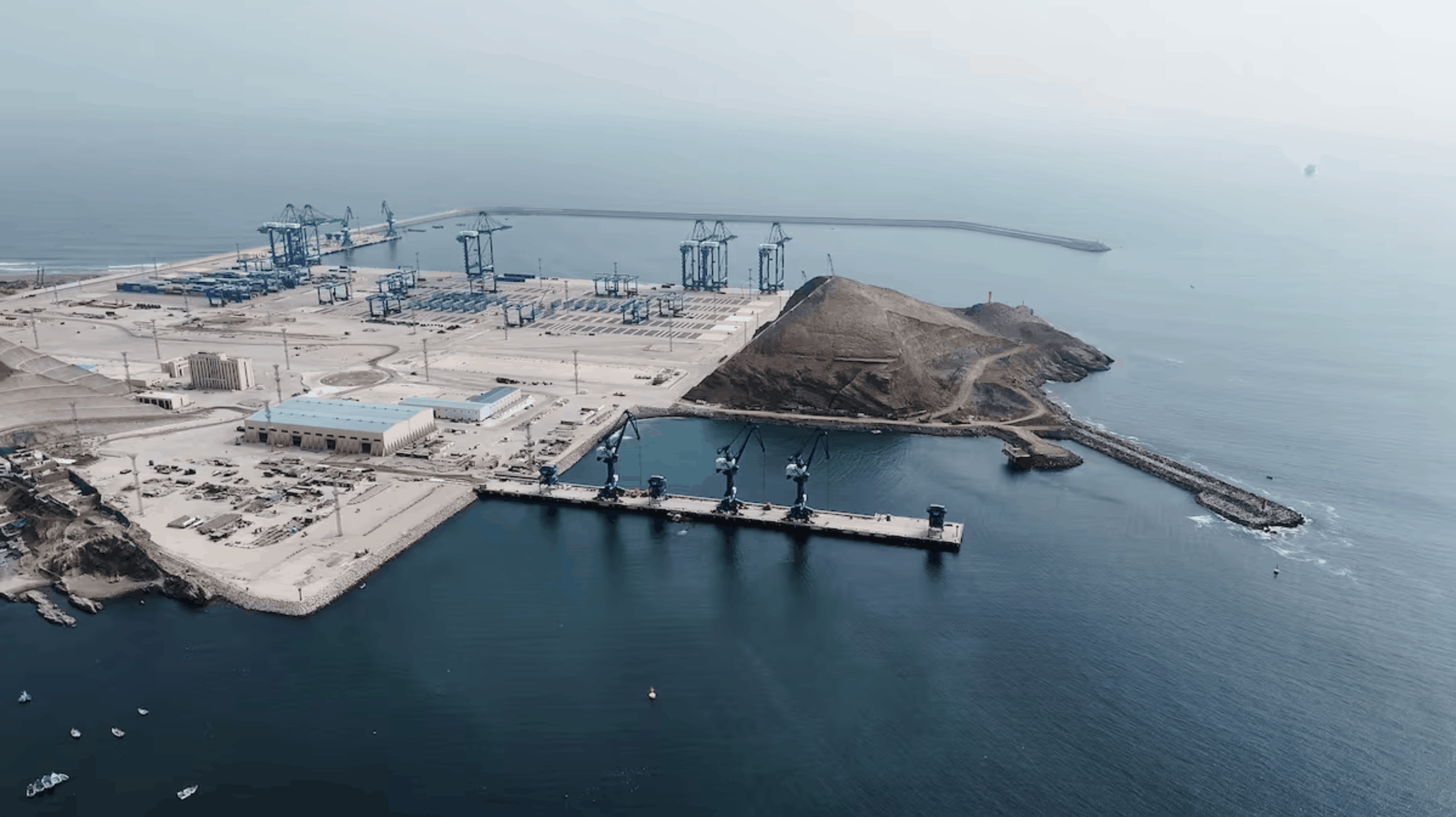
The Chancay megaport, located in the district of the same name 80 kilometers north of Lima, was inaugurated this Thursday within the framework of the Asia-Pacific Economic Cooperation Forum (APEC). The work, a multimillion-dollar joint project between China and Peru that began to take shape in 2007, aims to strengthen Beijing's presence in Latin America and, at the same time, consolidate the South American country as the main port hub of the South Pacific in the Asian market. “Our goal is to become the Singapore of Latin America,” said the Minister of Transport and Communications, Raúl Pérez Reyes. A declaration of intentions that the Government of Dina Boluarte, with very low approval, has tried to capitalize on despite the fact that the project is involved in a series of conflicts.Although the inauguration was attended by the President of the People's Republic of China, Xi Jinping, the event lacked the shine typical of an event of this nature. The ceremony was virtual, it was held at the Government Palace, where both Xi Jinping and Boluarte contemplated the Chancay megaport through a giant screen. The Executive gave two versions of the matter: first it justified itself by alleging that by “tradition” the president of China usually inaugurates works remotely, but then it maintained that in reality the measure is due to “security reasons.” Surrounded by hitmen and extortion, Peru is going through a new crisis that has revived civil society protests.
While Xi Jinping shook hands with Boluarte at the end of the afternoon, a large group of protesters made their rejection felt in the streets surrounding the APEC summit, in the Lima district of San Borja, as well as in various regions. of the country. It is the second of three days of consecutive strikes promoted by the transport and merchant unions, and repression by the police forces was the order of the day, with batons, pellets and tear gas bombs. The unrest is not only due to insecurity, but also to poverty that has worsened and a host of harmful laws about which the Executive has remained silent. Approaching two years in power, Boluarte has not been able to stabilize the country or inspire confidence. That is why it is clinging to the APEC summit, which Peru is hosting for the third time. As happened with the Sultan of Brunei, this Thursday Dina Boluarte presented the Great Collar of the Order of the Sun, the highest distinction of the Peruvian State, to the President of Indonesia, Prawobo Subianto.
“Thanks to the wisdom of civilizations we share similar visions and are united at heart. The Chinese always see 'sincerity as the fundamental thing and benevolence as morality', while the Incas are committed to 'not stealing, not lying, not being lazy'. Peruvian thinker José Carlos Mariátegui said: 'Spiritually and physically, China is much closer to us than Europe. The psychology of our people is more Asian than Western,'” Xi Jinping wrote in the official newspaper El Peruan about the relationship between China and Peru, two nations that in his view are “geographically distant but philosophically close.”
During the ceremony, the Chinese president congratulated that, despite the pandemic, those responsible for construction in both countries managed to complete this work. He also maintained that “ports are fundamental pillars for the development of our nations.” “This is the first smart port in South America. It will save a large amount of logistics budget and generate income for Peru. “Today we are witnessing the birth of a new maritime corridor for the new era.” Boluarte, meanwhile, said that the Chancay megaport “will position Peru as a key player in global trade [...]. “We invite sister countries to have Chancay as their door to the world.”
The Chancay megaport will generate, according to various estimates, 4.5 billion dollars in annual income and in its first year, during 2025, it could contribute up to 0.9 percentage points to Peru's GDP, according to the Central Reserve Bank. It is a work that will have fifteen breakwaters - in this first phase there will only be four - that will allow it to receive the largest ships in the world as it has a depth of 17.8 meters, according to experts the largest in Latin America. In addition, it will operate with a state-of-the-art automated system where cranes and vehicles will move the containers, almost without human intervention, from a control center. It is estimated that it will save an average of 25 travel days for commercial vessels from Latin American neighbors wishing to connect with Asia. It will also have a 1.8 kilometer tunnel to facilitate cargo transit.
But the project, which was initially a bet by a former sailor named Juan Ribaudo, and which now belongs 60% to the Chinese state company Cosco Shipping Ports Limited and 40% to the Peruvian mining company Volcan, faces several questions. . The main one is that everything indicates that it will not operate under the same legal framework as the other ports in the country. The infrastructure is a privately owned terminal, but at the same time it is categorized as public use. That is, it should be available to any company that wishes to transport cargo with a payment involved and as such it would become a service provider entity, like other ports.
However, Cosco Shipping rejects that name and refuses to pass the filter of the Supervisory Body for Investment in Transport Infrastructure for Public Use (Ositran), the public entity that regulates transport infrastructure in Peru. As revealed by the investigation portal Ojo Público, the Chinese company has filed an amparo action, an appeal that will be analyzed by the Chancay Civil Court on November 22, a week after the inauguration. They point out that their right to property and freedom of enterprise are being violated. A delicate matter that for now the Boluarte Government has hidden under the carpet.
The controversy dates back to a measure issued in 2021 by the National Port Authority that granted exclusivity of the essential services of the Chancay megaport to Cosco Shipping. Ojo Público has also reported that “between 2013 and 2023, the area of direct influence of the work grew by 685% [from 3.3 square kilometers to 25.9 square kilometers]. To make the expansion of this project possible, an intangible maritime area was transferred for the national defense of Peru, works were approved without environmental impact studies, and public land was sold for $0.85 per square meter.” The total planned investment is 3.4 billion.
Another controversy surrounding the megaport is its strategic position for potential military use. A few months ago Laura Richardson, head of the Southern Command of the United States Navy, indicated that "it could be used as a dual-use facility as it is a deep-water port." Son Yang, Chinese ambassador to Peru, has rejected these claims and emphasized that his country has no geopolitical intentions. It is estimated that this megaport, which has 141 hectares of port area, will have a whiteout until mid-2025 before beginning commercial operations.
Washington is wary of Beijing's growing influence in the region, which it considers a risk to its own leadership, and has attacked the construction of the Chancay megaport on several occasions. For the United States, a Chinese company having exclusive operating rights over this infrastructure could open the door for the Xi Government to carry out intelligence and monitoring activities. “We consider it essential that countries in the [southern] hemisphere ensure that China's economic activities respect local laws and guarantee human rights and environmental protection,” said Brian Nichols, the main US diplomat for Latin America, on Thursday, reports AFP.
An editorial published on Monday by the Chinese newspaper Global Times addressed precisely Washington's criticism and the fear that Beijing would use the port for military purposes or as a tool of economic coercion. “The obsession with the 'Monroe Doctrine' causes some American politicians to be prejudiced against the port of Chancay, to invent smears, such as 'military use of the port,' 'economic coercion' and 'ecological damage,' and to exaggerate the 'growing China's expansion in Latin America,” the text read. “China has exported the most advanced port construction and management technology and carried out cooperation based on the concept of green and low-emission construction and the principle of openness, inclusion and non-exclusion of third countries,” he added.
At the end of the afternoon, the president of the United States, Joe Biden, landed in Lima to actively participate in the APEC leaders' summit and hold bilateral meetings in his last months in the White House. Analysts point out that Biden arrives weakened after Donald Trump's victory and the prominence that Xi Jinping has received, with whom he will meet this Saturday. Next week the two leaders will travel to Brazil to participate in the G-20 summit in Rio de Janeiro.